In high-end residential projects, the details that clients notice every day often matter more than the statement pieces. Drawer systems sit at the heart of kitchens, wardrobes, dressing rooms and living storage. When specified thoughtfully, they deliver quiet performance, lasting durability and a refined user experience. When treated as an afterthought, they become a source of frustration and costly remedial work.
For architects, interior designers, kitchen designers and cabinetmakers working on premium homes in South Africa, choosing the right drawer system is both a technical and a design decision. It affects how a space feels to use, how long the joinery lasts, and how well the finished project reflects the quality of the overall specification.
Why Drawer Systems Deserve Early Attention
High-end residential work demands hardware that performs consistently under daily use while remaining visually discreet. Soft-close drawer systems, full-extension runners and carefully engineered movement technology are no longer optional extras. They form part of the expected standard.
Specifying early allows the design team to align the hardware with cabinet dimensions, material choices and the intended lifestyle of the occupants. Leaving the decision until late in the process often forces compromises on space planning, load requirements or aesthetic integration.
GRASS ZA, as a supplier of premium furniture fittings and architectural hardware in South Africa, regularly sees the difference that early engagement makes. Access to international brands such as GRASS provides designers and makers with movement systems that have been developed for demanding residential applications.
Key Factors in Selecting the Right System
Several practical considerations should guide the specification process.
Load capacity and intended use: Different zones within a home place different demands on drawers. A kitchen base unit holding heavy pots and crockery requires higher load ratings than a shallow drawer in a dressing table. Full-extension runners that allow complete access to the back of the drawer improve usability, particularly in deeper cabinets. Matching the system to the expected weight and frequency of use prevents premature wear.
Movement quality and user experience: Soft-close mechanisms have become a baseline expectation in premium projects. The quality of the damping, the consistency of the close, and the option of push-to-open or tip-on systems all influence how the cabinetry feels in daily life. In open-plan living spaces, quiet operation is especially important. Specifiers should evaluate how the drawer behaves under both light and heavy loads, and whether the system remains stable when fully extended.
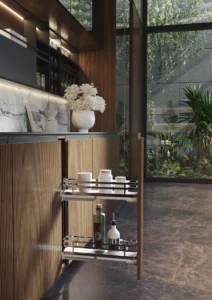
Aesthetic integration: In high-end work, the hardware is often required to disappear. Concealed runners and slim-line systems keep the visual focus on the joinery and the materials. Side profiles, front panel connections and the relationship between the drawer and the cabinet carcass all affect the final appearance. Some systems allow for particularly clean interior lines or the integration of organisational accessories that maintain a tailored look when the drawer is open.
Compatibility with cabinetry construction: Not every runner or drawer system suits every method of manufacture. Cabinetmakers need clear guidance on required clearances, fixing methods and whether the system works with framed or frameless construction. Early discussion with a knowledgeable supplier helps avoid site issues and ensures the hardware supports rather than restricts the chosen construction approach.
Longevity and serviceability: Premium residential projects are expected to perform for many years. Systems designed for high cycle counts, corrosion resistance where relevant, and straightforward replacement of individual components reduce long-term risk. In coastal or humid environments common in parts of South Africa, material selection becomes particularly important.
Matching Systems to Specific Applications
Kitchens remain the most demanding environment for drawer systems. High-use drawers benefit from robust soft-close technology, good side stabilisation and options for internal organisation that keep the space efficient. Integrated lighting can further enhance usability, turning a simple drawer into a considered storage solution.
Wardrobes and dressing rooms prioritise smooth, quiet movement and the ability to create tailored internal layouts. Full-extension systems combined with thoughtful accessories allow clients to access every item easily while maintaining a calm, ordered appearance.
In living areas, studies and guest suites, the emphasis often shifts toward refined aesthetics and quieter operation. Here, the visual weight of the hardware and the quality of the movement become central to the overall design language.
Common Pitfalls to Avoid
One frequent issue is specifying a system based solely on price or catalogue appearance without checking load ratings or installation tolerances against the actual cabinet design. Another is overlooking the interaction between the drawer front, the runner and the surrounding joinery, which can lead to alignment problems or restricted opening.
Failing to consider future maintenance or the availability of spare parts can also create difficulties years after handover. Working with established furniture hardware suppliers who represent proven international brands reduces these risks.
The Value of Specialist Support
Specifying the right drawer system is rarely a purely technical exercise. It benefits from practical product knowledge and an understanding of how different systems perform in real residential conditions. GRASS ZA works with architects, interior designers, kitchen designers, cabinetmakers and joiners across South Africa to provide access to premium movement systems from GRASS and complementary architectural hardware solutions.
For professionals developing high-end residential projects, exploring the available drawer systems and related kitchen and cabinetry hardware at the design stage is a straightforward way to protect the integrity of the work. Catalogues and detailed product information are available, and the GRASS ZA team is ready to discuss specific project requirements or help refine a specification.
Choosing well-considered furniture fittings and movement systems is one of the more effective ways to ensure that premium residential interiors continue to feel refined and effortless long after the project is complete.
Download the complete GRASS ZA catalogue to explore our various products for architects, specifiers, and designers.
Stay up to date with the latest product launches, new additions, and the latest news by following us on Facebook, Instagram, or LinkedIn.