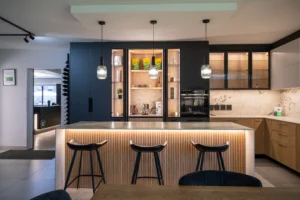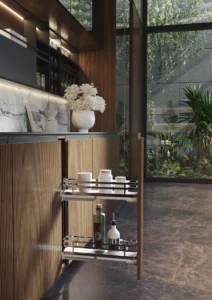
SIGE kitchen storage systems, supplied in South Africa by GRASS ZA.
Every kitchen layout eventually meets a corner. On plan it looks efficient. In daily use, it is often the least successful storage in the room. The traditional corner cupboard still appears on many drawings, and clients then find that pots vanish behind the centre post.
For architects, kitchen designers and joiners, the corner is a specification problem, not leftover space. Choose the right kitchen storage solution early and it becomes usable cabinetry. Leave the fittings until the carcasses are built and the options shrink.
Why the traditional corner cupboard falls short
A conventional corner base unit creates volume that is difficult to use. Fixed shelves force the user to reach across a diagonal. A basic carousel improves rotation, but the centre post and circular footprint waste the square corners of the cabinet. Items still sit behind one another.
Blind corner units, where one run continues past the return, are more demanding still. Without a dedicated swing-out or pull-out, the hidden bay becomes dead space. People then store the items they use least in some of the most expensive cubic metres of the kitchen.
Treat corner hardware as a design decision
Cabinet hardware is usually considered early for drawers and doors. Corner mechanisms often are not. That is a missed opportunity in architectural specification.
The mechanism decides more than how the trays move. It affects carcass width and internal depth, door width and handing, hinge type and projection, whether a centre post or intermediate shelf is required, and how the unit sits next to a hob, sink or tall housing.
A 900 mm blind corner with a 450 mm door needs a different system from a 1000 mm unit with a 600 mm door. Handing must match the door swing. Hinge projection can clash with swing-out trays if it is not checked on the drawing. Specifying kitchen hardware at layout stage avoids rebuilding a unit that was never designed for the fitting.
GRASS ZA works with specifiers at this point so the storage solution, the hinges and the surrounding movement systems are planned as one assembly.
Solutions beyond the carousel
Italian manufacturer SIGE has spent more than fifty years developing kitchen fittings and accessories for awkward volumes, including corners and tall units. Through GRASS ZA, those systems are available to South African kitchen designers, specifiers, architects, and kitchen furniture manufacturers.
Independent swing-out shelves
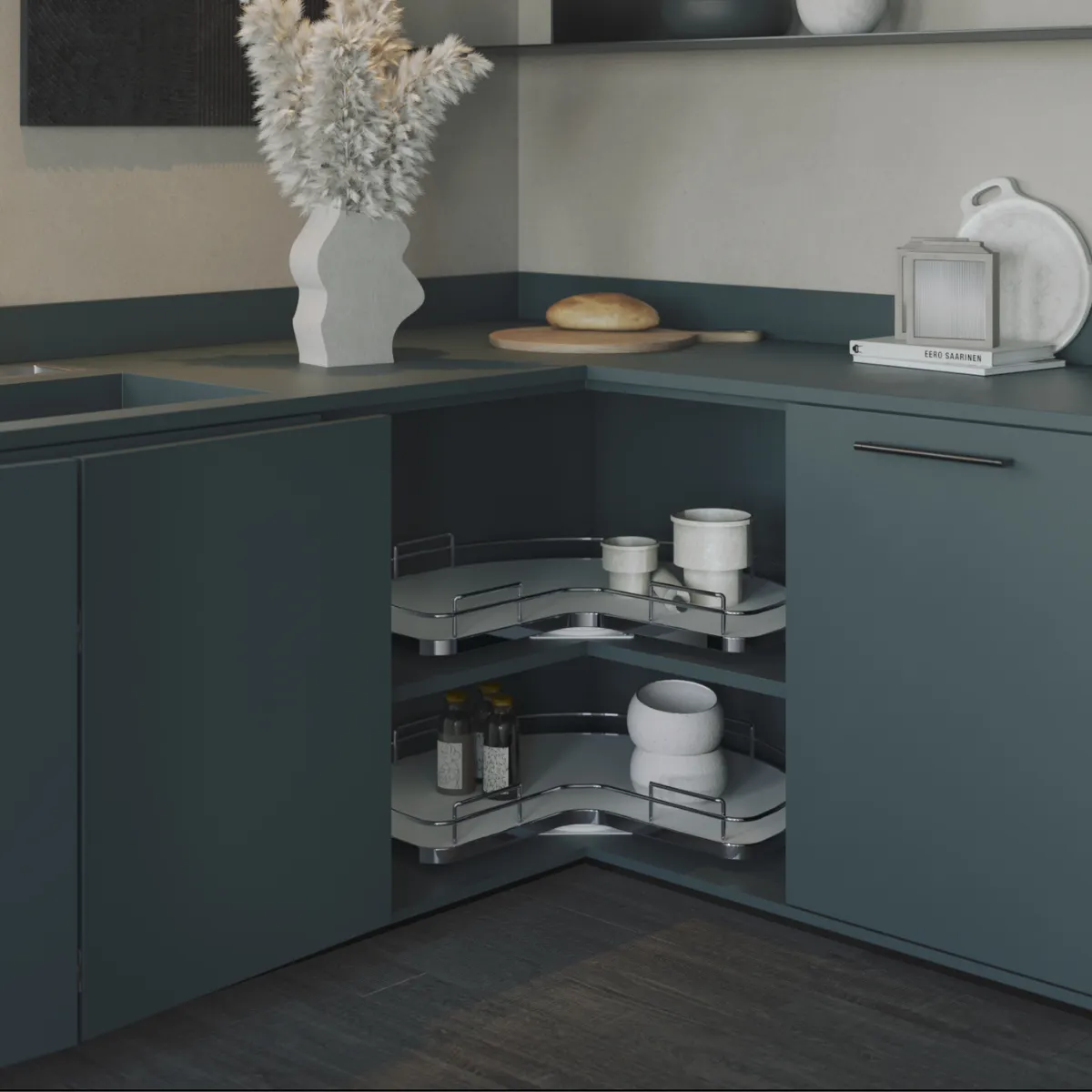
Systems such as SIGE Nuvola use two independently operated trays that swing and slide the contents out of the blind corner and into the door opening. Each shelf can be used on its own, which matters when the lower tray holds cookware and the upper tray holds lighter goods. The trays typically fix to the base and an intermediate shelf, so cabinet construction stays familiar to the joiner and there is no bulky post in the middle of the unit.
Fully extractable corner systems
Where the brief asks for the contents to come forward as a set, a linked pull-out such as SIGE Spazio brings baskets out of the corner in a coordinated movement. Open the door, then draw the storage into the room. Confirm internal depth and door width before the cutting list is issued.
Carousels, used with intent
A three-quarter carousel still has a place. In a true L-shaped corner with two doors, or where simplicity matters more than full extraction, a well-made SIGE carousel with a solid base remains a practical kitchen storage solution. Choose it deliberately, not by default.
What specifiers should lock in before the unit is drawn
A useful specification for corner cabinetry should capture at least the following:
- External cabinet width, commonly 900 mm, 1000 mm or 1200 mm, and the minimum internal depth the mechanism needs
- Door width, overlay and whether the unit is left- or right-handed
- The door opening angle the trays require, usually a clear 90 degrees or more
- Hinge projection into the cabinet, especially where hinges fix to a centre stile
- Finish, so trays sit comfortably with the rest of the kitchen fittings and accessories
- What will actually be stored: stacked pans need a stable, solid base
SIGE offers related mechanisms across different visual families, including more architectural finishes such as Materia. That helps interior designers keep corner hardware consistent with other storage in the same project. Download the latest SIGE catalogue here.
Hardware works as a system
A corner mechanism only feels right if the door does. Concealed hinges with the correct opening angle belong on the same page of the specification as the trays. GRASS movement systems, including cabinet hinges and, where the adjacent run uses drawers instead of a corner, drawer systems and drawer runners, shape how the whole block of furniture feels in use.
In some layouts the better answer is not a corner unit at all. Two banks of full-extension drawers meeting at the return can be cleaner for the user. That decision belongs on the first plan. Integrated furniture lighting from L&S can pick out the interior so a deep unit is not left in shadow. Hawa sliding and folding door systems become relevant when a corner is resolved as a tall housing or pantry.
Specify early, then speak to the people who stock the parts
Premium furniture fittings earn their place when they are installed in a carcass built for them. GRASS ZA supplies SIGE kitchen storage solutions alongside GRASS movement systems, so hardware for kitchen designers and cabinetmakers can be checked for compatibility before production starts.
The teams in Cape Town and Johannesburg support architects, interior designers, specifiers, cabinetmakers and joiners who need to match a mechanism to a live project. If a corner works against the plan, it is usually cheaper to change the hardware than to rebuild the unit later.
Explore the SIGE range through GRASS ZA, view or download the relevant catalogues, or speak to the team about an upcoming kitchen or cabinetry project. The traditional corner cupboard is easy to draw. A well-specified corner is far easier to live with.